iGaming
How Payout Speed Drives Player Retention for iGaming Operators
8 min read
Read
Open Banking payments are reshaping deposit flows for iGaming operators in regulated markets. Bank-to-bank transfers authenticated through the player's own banking app eliminate the friction and failure rates of card payments while providing instant settlement. It considers where bank-based payments fit alongside established deposit options.
Further Reading
Open Banking — the regulatory framework that allows payment initiation directly from a player's bank account via a secure API connection — has emerged as among the most significant payment method developments for iGaming operators in regulated markets. The combination of high approval rates, instant settlement, and strong authentication makes Open Banking a compelling alternative to card deposits, which face increasing restrictions in several key markets. It considers where bank-based payments fit alongside established deposit options.
In the UK alone, the volume of iGaming deposits processed via Open Banking payment initiation has grown substantially year-over-year, driven by both operator adoption and growing consumer familiarity with bank-authenticated payments. The regulatory environment that created Open Banking has, somewhat unexpectedly, delivered one of the most player-friendly and operator-efficient payment methods the iGaming industry has seen in a generation.
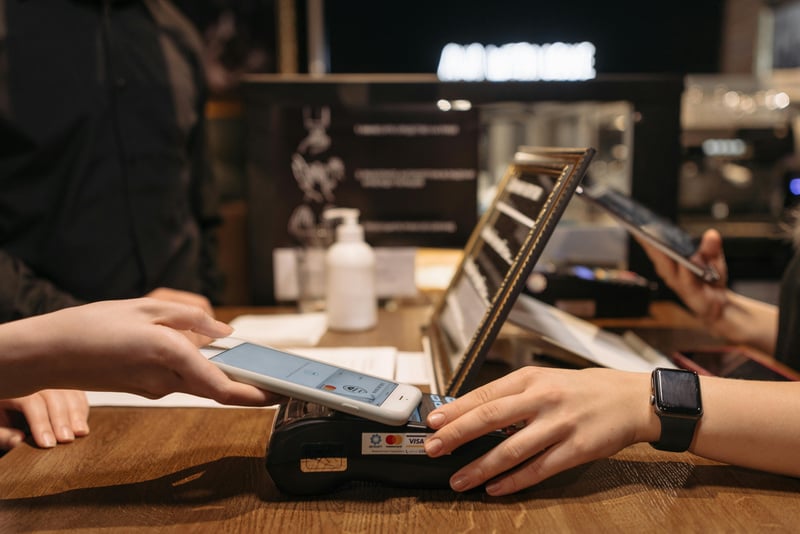
When a player selects an Open Banking deposit method in the cashier, they are redirected or presented with a deeplink to their banking app. They authenticate using their bank's existing biometric or PIN authentication — the same mechanism they use to log in to their banking app — and approve the payment. The funds are transferred directly from their bank account to the operator's account via Faster Payments (UK), SEPA Instant (EU), or the equivalent domestic instant payment scheme.
The key technical difference from card payments is that there is no card network in the flow. The payment goes bank-to-bank, which means there are no card scheme rules about gambling merchant categories, no issuer-level gambling blocks, and no 3DS authentication requirement. The player's existing bank authentication serves as the single strong authentication step, eliminating the additional friction that 3DS introduces for card deposits.
Open Banking deposit approval rates in iGaming consistently run at 90–96%, significantly above card acceptance rates in most markets. The primary reason is the absence of card-level restrictions. Many card issuers apply specific risk rules to gambling MCCs — blocking transactions automatically or applying tighter fraud thresholds. Since Open Banking bypasses the card network entirely, those restrictions do not apply. Declines in Open Banking flows are typically limited to genuine insufficient funds situations, connectivity failures, or bank-specific technical issues.
The higher approval rate has a directly calculable revenue impact. For a platform processing 50,000 deposit attempts per month with an average deposit of £50, improving approval rate from 72% to 92% generates an additional 10,000 successful deposits worth £500,000 in additional settled volume per month. That is a meaningful commercial impact from a payment method switch that also improves the player experience.
Instant payment schemes in the UK (Faster Payments), across most EU countries (SEPA Instant), and in a growing number of non-European markets settle in seconds rather than the T+1 or T+2 typical of card transactions. For operators, this means player funds are available immediately. There are no settlement cycles to manage and no exposure to card scheme processing fees on settlement timing.
Open Banking payments offer several specific advantages in the context of responsible gambling regulation. Because payments come directly from a bank account, they are inherently linked to a verified bank account holder — providing a layer of identity assurance that is difficult to achieve with card payments. Some regulators are actively encouraging Open Banking adoption as a more transparent payment method for gambling, given the traceability of bank transactions and the ability to apply deposit limits at the account level.
UK operators subject to the Gambling Commission's financial vulnerability requirements will also find that Open Banking provides a cleaner mechanism for verifying that players are paying from their own funds. The direct bank account link eliminates the ambiguity about fund source that prepaid cards and some e-wallet methods can create, making Open Banking an attractive option for compliance-conscious operators navigating affordability check requirements.
Adding Open Banking as a deposit method requires integration with one or more Open Banking payment initiation service providers. The main considerations are coverage — the percentage of your player base whose banks are supported on the provider's network — and UX quality. The player-facing flow varies significantly between providers, and a poorly designed bank authentication redirect can create abandonment at the critical authentication step.
A/B testing different Open Banking providers alongside your existing payment methods is the most effective way to calibrate conversion rates and identify any UX friction points before making a final vendor selection. Most operators find that Open Banking, once properly integrated and presented prominently in the cashier, becomes one of their top two or three deposit methods within six months of launch — particularly among younger players who are already comfortable with bank app authentication for other payments.
The regulatory and commercial tailwinds behind Open Banking in iGaming are strengthening. PSD3 in Europe is expected to drive further banking API standardisation and reduce the fragmentation that has historically limited cross-border Open Banking deposits. In key growth markets outside Europe, domestic instant payment schemes are expanding rapidly. Operators who invest in Open Banking capabilities now are building infrastructure that will become increasingly central to their payment stack as card acceptance in regulated iGaming markets continues to face pressure from legislators and issuers alike.
Once you have launched Open Banking as a deposit method, the measurement framework should track several specific metrics beyond the overall adoption rate. Track the abandonment rate at the bank authentication step — this is where friction is most likely to occur and where UX improvements will have the most impact. Measure the conversion rate from Open Banking deposit attempt to completed settlement separately from card deposit conversion, so you can compare the two on a like-for-like basis and quantify the conversion improvement attributable to the payment method switch.
Also track the deposit-to-play conversion — the percentage of successful Open Banking deposits that result in actual gameplay within a defined window. This metric tells you whether the faster, frictionless deposit experience is translating into more engaged players, not just more deposits in the absolute sense. Operators who measure at this depth consistently find that Open Banking deposits generate higher deposit-to-play conversion than card deposits, partly because the absence of declined card frustration puts players in a more positive mental state at the start of their gaming session. These downstream behavioural differences compound over time into meaningfully higher lifetime value for players acquired and retained through Open Banking deposits.
More in iGaming