eCommerce
How to Accept International Payments in eCommerce Without Losing Revenue to FX Friction
8 min read
Read
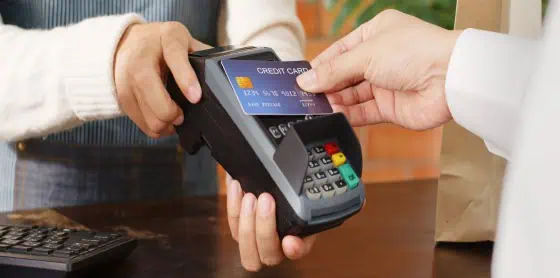
Card payments and PayPal are losing market share in every major eCommerce geography. This updated guide explains the alternative payment methods that B2B eCommerce merchants need to support in 2026 and how to prioritise implementation across markets. The selection process should begin with the ways target customers prefer to pay.
Further Reading
Credit and debit cards and PayPal together accounted for the majority of eCommerce transactions globally as recently as 2018. By 2026, their combined share has declined materially in most major markets as alternative payment methods have grown rapidly. In China and much of Southeast Asia, domestic mobile wallets are now the default. In Europe, bank-based payment methods dominate several of the largest markets. In Latin America, local payment methods specific to each country carry significant volumes. For eCommerce merchants with international ambitions, supporting only cards and PayPal means ceding a significant portion of the addressable market in most high-growth geographies. The selection process should begin with the ways target customers prefer to pay.
Instant bank payment schemes — where the shopper authenticates a payment directly from their banking app without entering card details — have grown rapidly across Europe and are expanding in other markets. These methods offer several advantages over card payments: no chargebacks (payments are push transactions that cannot be reversed by the payer), faster settlement in many cases, lower processing costs, and strong authentication built into the payment flow. In Germany, SEPA-based bank transfer and invoice payment methods account for a large share of eCommerce volume for higher-value purchases. In the Netherlands, iDEAL processes the majority of eCommerce transactions. In Brazil, PIX instant bank payments have become the default for many categories.
For merchants entering markets where bank-based methods dominate, the practical requirement is a payment gateway or PSP that natively supports the relevant local scheme rather than trying to redirect domestic bank payment volumes through international card networks.
Mobile wallets — both device-native (Apple Pay, Google Pay) and market-specific (GrabPay, GoPay, Alipay, WeChat Pay, M-Pesa) — are the fastest-growing payment method category in eCommerce globally. Device-native wallets are particularly important for mobile commerce: they eliminate the need to enter card details on a small screen and consistently deliver higher mobile checkout completion rates than card entry. Market-specific wallets are essential for merchants targeting markets where a specific wallet has achieved dominant adoption — attempting to enter the Thai eCommerce market without GrabPay support, or entering China without Alipay integration, means excluding the majority of the local digital payment infrastructure.
BNPL has shifted from a niche payment method to mainstream eCommerce infrastructure across Europe, Australia, and North America, with significant growth in Southeast Asian markets as well. Consumer-facing BNPL — offered at checkout by providers including Klarna, Afterpay, and Tabby — increases average order value for merchants in categories where higher-ticket purchases are common, and attracts younger shoppers who prefer instalments over credit card debt. Adding BNPL as a payment option typically increases average order values by 15–25% in relevant merchant categories, making the integration cost straightforward to justify. Our payment processing platform enables merchants to support all major payment method categories through a single integration.
In markets where a significant portion of the population is underbanked or prefers prepaid payment methods, digital vouchers and mobile top-up credits serve as a payment mechanism that extends the addressable market beyond bank account and card holders. Platforms that accept digital product vouchers as payment — or that partner with mobile operators to enable carrier billing — can reach consumer segments that are inaccessible through conventional payment methods. This is particularly relevant for digital goods merchants targeting users in Africa, the Middle East, and parts of Southeast Asia and Latin America. Contact our team to discuss how NuovoConnect's digital product infrastructure supports alternative payment models for eCommerce merchants targeting high-growth markets.
More in eCommerce